When it comes to dental treatments, one of the first things on everyone’s mind is will it hurt. If you are considering composite bonding, this question has likely crossed your mind too. Composite bonding can work wonders for your smile, so wondering about discomfort is completely natural. In this post, we will walk you through what to expect during the procedure, step by step, and help you find out whether there’s any pain involved, how long the process takes, and what it actually feels like. So does composite bonding hurt? Keep reading to find out.
If you are thinking about tooth bonding and feel worried the procedure might be painful, you can put your fears to rest. Most clinics prioritize patient comfort and satisfaction, and guide you through each step of the process, ensuring the bonding experience is as comfortable as possible.
Composite bonding is generally a painless, dental procedure that does not hurt the teeth. The common cause of pain in bonded teeth is an incorrectly applied bonding procedure by an incompetent physician, when the bonding material is not applied correctly or does not adhere properly, leading to gaps or rough edges that can irritate the gums and surrounding tissues.
Our suggestions help people achieve successful, problem free composite bonding treatments, and the answers to your questions are explained clearly when reviewing this article.
What Composite Bonding Is All About
To understand composite bonding, it helps to know the details and what to expect from this cosmetic dental treatment. It’s designed to fix minor imperfections in your smile, such as chips, gaps, discolourations, cracks, and discoloration.
During the process, a dentist uses a tooth colored resin material, also called resin, and carefully shapes and polishes it to blend with your natural teeth, creating a seamless smile. Many people see it as a popular choice because it can improve appearance and the function of teeth at the same time.
What makes tooth bonding or teeth bonding appealing is how quick and simple it is. The applying of the tooth colored resin material usually happens in a single visit, with minimal tooth preparation, making it a great option for patients who want quick dental treatment solutions. It does not require cutting teeth, does not hurt teeth, and works well for straightening teeth or closing gaps without invasive treatments like crowns or veneers.
As an affordable option, composite bonding can truly enhance smile results while keeping the experience comfortable and stress free.
Is Teeth Bonding Actually Painful?
One of the main appeals of dental bonding is its simplicity, and honestly, that is what most people notice first. The process involves little removal or even no removal of the natural tooth structure, unlike veneers or crowns that often need reshaping or reduction of the original tooth. Because it preserves integrity, teeth bonding does not damage teeth and is generally not painful procedure, which is why many patients feel relaxed going into the appointment.
Does Composite Bonding Cause Any Pain?
After understanding that teeth bonding is generally comfortable, it’s natural to wonder specifically about composite bonding. In most cases, composite bonding does not hurt because the procedure is gentle and focuses on the surface of the tooth.
Dentists usually add and shape a thin layer of resin without touching the inner tooth, so pain is rare. From what many patients share, the only thing they notice is mild pressure or keeping their mouth open for a while, which feels more tiring than painful.
What Happens During a Composite Bonding Appointment
Your First Visit and Smile Planning
A composite bonding experience usually starts on a smooth and comfortable note, so you know what to expect from the procedure. During the consultation and planning, your dentist talks about your smile goals in a relaxed consultation, listens to your concerns, and helps you achieve the look you want. They assess teeth carefully to confirm that composite bonding is the right solution for you.
Preparing the Tooth Gently
Before applying composite material, the dentist makes sure the clean surface of your teeth is ready for a strong bond. There is no drilling and no enamel removal, which is why the step feels comfortable and non invasive for most people.
Layering and Shaping the Resin
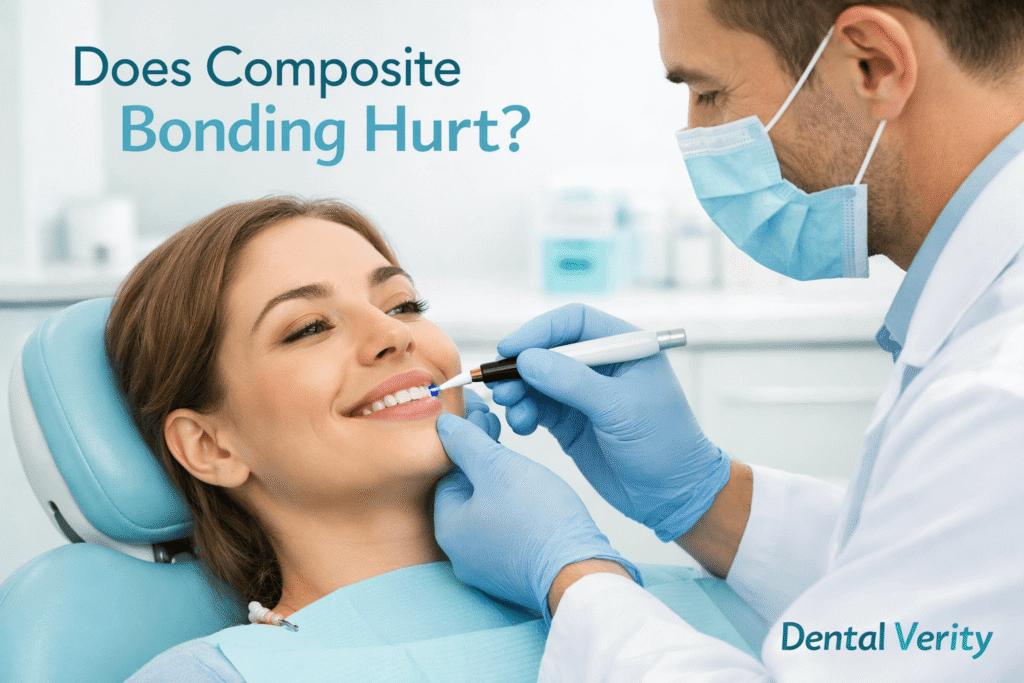
Next, the dentist will apply tooth coloured resin to the teeth, working in resin layers to shape and build gradually. This careful method helps create a perfect blend with your natural teeth. You might feel slight pressure as they mould resin, but there is no discomfort involved.
Setting the Resin in Place
Once the resin is shaped, a curing light is used to harden resin. This step takes just seconds per layer and is a completely painless process. The light activates resin, giving it long lasting strength and durability.
Final Touches for a Natural Look
In the last stage, the dentist will shape and polish the bonded area to create a natural smooth finish. The bonded teeth look shiny, seamless, and refreshed, leaving you with a refreshed smile and polished smile. In most cases, the whole visit is done in under an hour.
What Can Trigger Discomfort or Sensitivity After Dental Bonding?
For most patients, the uncomfortable part of the procedure is more about the sensation than actual pain. Some people notice light tooth abrasion while the dentist applying resin and shaping resin, which can cause mild sensitivity during the abrasion process, but it is usually short lived and manageable. When the curing light is used to harden resin, it is not painful, though a slight warmth can be felt. Any discomfort linked to composite bonding is generally minimal and temporary, and most patients forget about it soon after the visit.
How Long Does Discomfort Usually Stick Around?
After tooth bonding, most patients notice discomfort that feels mild and short lived, often lasting only a brief period. This sensitivity usually lasts a few days and sometimes up to a week, with heightened sensitivity to hot foods, cold foods, and drinks as your teeth adjust.
In most cases, the feeling will gradually decrease, especially if you follow simple post procedure care tips. If you notice sensitivity beyond a week, it’s always a good idea to check in with your dentist for peace of mind.
Post-Procedure Care and Pain Management
After composite bonding, most people describe the experience as pain free, though mild sensitivity afterward can happen. These post procedure tips are meant to keep you comfortable, especially when reacting to hot foods or cold foods during the early days.
Post-Procedure Tips to Manage Pain After Bonding
In the first few days, hot foods, cold foods, and even cold drinks can trigger temporary sensitivity in bonded teeth. It helps to avoid hard foods like ice and sticky treats such as toffees, since extra pressure on bonded teeth needs about a week to settle. If there is lingering discomfort, some patients use a mild pain reliever for sensitivity, which usually fades within a few days. Keeping up with daily brushing and a proper flossing routine helps maintain health for your natural teeth and composite bonding.
How to Manage Teeth Sensitivity After Composite Bonding?
After a composite bonding treatment, it is common to experience sensitivity, especially with hot foods, cold foods, or sweet foods, but it usually fades in a few days. To manage sensitivity, using toothpaste for sensitive teeth can reduce discomfort with regular use.
It also helps to avoid extremely hot foods, avoid cold foods, and brush gently with a soft bristled toothbrush to prevent aggravating sensitive areas. If sensitivity lingers, a fluoride mouthwash can strengthen enamel around the bonded area, and these simple steps support managing sensitivity while keeping a comfortable smile.
Can Tooth Bonding Reduce Sensitivity?
One of the real advantages of tooth bonding is how it helps many individuals dealing with tooth sensitivity. Among the primary benefits, it can create barrier over exposed dentin, helping with reducing transmission of stimuli that cause sensitivity. By covering sensitive areas with a protective layer, bonding can diminish discomfort when you eat hot foods, cold foods, or sweet foods, and even when drinking certain beverages.
Is Removing Composite Bonding Painful?
Most patients report little discomfort or even no discomfort during the composite bonding removal procedure, especially when handled by an experienced dentist. The dentist can safely remove composite material without touching the deeper layers of tooth, where nerves and blood vessels are found, which helps protect patient comfort. In some cases, dentists may use local anesthesia to desensitize areas around the composite tooth, so vibrations or sensations from dental instruments feel minimal and easy to tolerate.
FAQs
Is teeth bonding a long-term solution?
Teeth bonding can last many years, but it isn’t forever. Most people enjoy good results for around five to ten years, depending on how well they care for their teeth and daily habits like eating and grinding.
Can composite bonding break easily?
Composite resin is fairly strong, but it’s not indestructible. When done by a skilled dentist and looked after properly, bonding usually holds up well. Avoiding habits like chewing ice or very hard foods really helps extend its life.
Does bonding work for gaps between teeth?
Yes, bonding is often a great choice for small gaps. A dentist can shape the resin to close spaces and create a more even look, often in just one visit.
Do I need special care after composite bonding?
Not really. Normal brushing, flossing, and regular dental check-ups are usually enough. Being a bit careful with very hard or sticky foods can make a big difference over time.
Can bonded teeth be repaired or replaced later?
Absolutely. If bonding chips or wears down, it can often be touched up or replaced without much trouble. Many patients find this flexibility reassuring.